Brighton and Hove City Council has officially given its support for the government to start process for an elected Sussex mayor.
Council cabinet members voted to approve the devolution plan in principle when they met at Hove Town Hall on Thursday (16 October).
The Labour council leader Bella Sankey said that she had already met with fellow council leaders and key figures from other organisations at the first meeting of a new partnership board as they prepared to create a combined county authority for Sussex and Brighton.
The board, which includes the leaders of East Sussex County Council and West Sussex County Council, has appointed an interim chief officer to guide the creation of the new mayoral combined county authority, Mark Rogers.
Mr Rogers has extensive experience and worked on the creation of similar local authorities in the West Midlands, East Midlands, Hull and East Yorkshire.
Councillor Sankey said: “Devolution will bring influence and financial investment closer to local communities so we can decide how to create more jobs and affordable homes and deliver better integrated public transport. Of that I have no doubt.
“There is so much which we can achieve by working together with our neighbours and by taking advantage of the opportunities being created by devolution and the transfer of decision-making and funding to communities here in Sussex.
“Sussex has so much to offer, so much to be proud of, and that stretches beyond the boundaries of our amazing city.
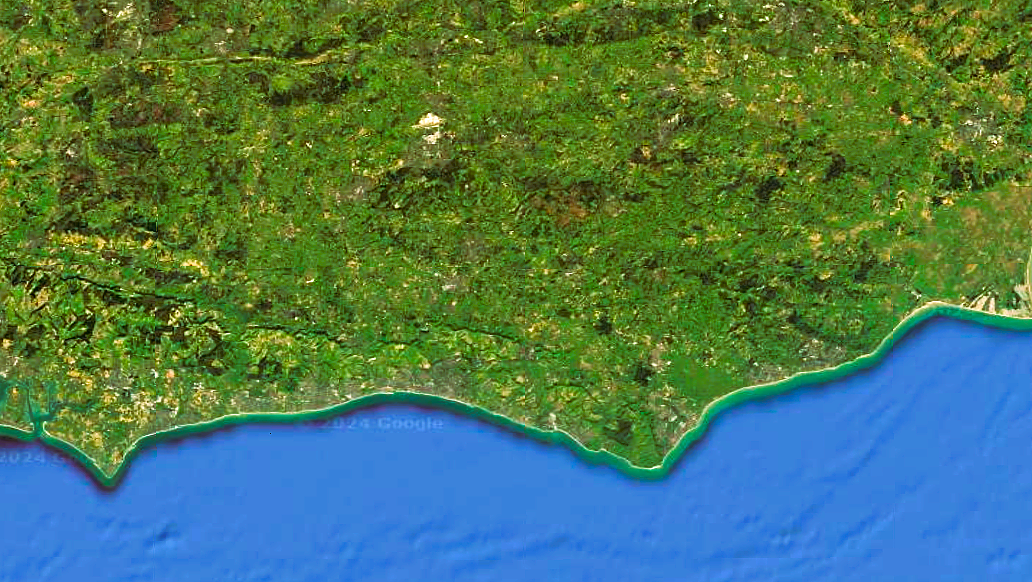
“From Chichester in the west to Rye in the east, from Crawley in the north to our fantastic community here in Brighton and Hove, a united Sussex is a force to be reckoned with.”
The new combined authority would be expected to drive growth and shape public services with responsibility for
- Transport and local infrastructure
- Skills and employment support
- Housing and strategic planning
- Economic development and regeneration
- Environment and climate change
- Health, wellbeing and public service reform
- Public safety
Labour councillor John Hewitt, who has led the devolution process in Brighton and Hove, said: “Having these decisions made in Sussex, for Sussex, will ensure that decisions will be made for the urban, rural and coastal communities in our great county.
“Our preferred model for local government reorganisation, which we submitted following last month’s cabinet meeting, will complement this as it allows five areas of Sussex to have their voices heard at the top table.
“With these powers, significant funding will be secured by a new 30-year £1.14 billion investment fund which will be able to support the agreed regional priorities. ”
Green councillors voted against setting up a combined mayoral authority for Sussex and Brighton, with Conservatives abstaining, at a meeting of the full council on Monday (13 October).
Green councillor Ollie Sykes said that areas of responsibility might pass from the national government to the mayoral authority but the council would also lose responsibilities, passing them upwards.
He said: “There is an irony here. Many policy proposals, local and national, have screamed out for urgent delivery.
“And because they may have been or are politically contentious, the response from the prevailing administration has been ‘now is not quite the right time’ for taxing cigarettes, enforcing seatbelts, gay marriage, cycle lanes on The Drive, environmental protections, net zero.
“Usually common sense has won out but, turning this on its head, if there are ever policy decisions that scream out potentially nice ideas but let’s flesh them out and maybe wait until the politics and finances are a bit more predictable, they are devolution and its difficult cousin local government reorganisation.”
He said that devolution and local government reorganisation would be Labour’s Brexit moment.
Conservative councillor Emma Hogan said: “All the talk is of increased availability of money, improved transport links and other increased opportunities.
“In reality, I doubt the proposed devolution and the creation of the mayoral strategic authority in Sussex will impact greatly on us here in Brighton and Hove.”
She raised concerns about the effects on rural communities with parish councils – and the cost when there were “more pressing issues”.
Labour’s majority meant that the vote went through to the council cabinet meeting on Thursday.
The mayoral authority would be set up next year before a local government reorganisation which would leave Sussex with a small number of unitary councils.
At the moment, Brighton and Hove City Council is the only unitary council in Sussex. East Sussex and West Sussex currently have a two-tier set-up, with county and district councils running different services in the same areas.
Ministers had hoped that the existing councils in Sussex would come up with a joint proposal for the new-look unitary councils but several different ideas have been submitted.
Brighton and Hove City Council has suggested five unitary councils, each serving a population of between 300,000 and 400,000. The proposal is currently with the government for consideration before a public consultation.
Mayoral elections are expected to take place in May next year.
So far four candidates have been selected to stand: Katy Bourne (Conservative), Ben Dempsey (Liberal Democrat), Rachel Millward (Green) and Martin Webb (Independent).








My biggest fear is that more of our precious countryside will be taken for housing and wind farms and solar panels. Smaller areas will lose any power they currently have and the huge sussex mayoralty will have it all so can impose on the good people of Sussex what they want. Darker days ahead, make it stop.
With over 250 in between parish and council authorities something has to go just to be able to function, as is there are enough local government authorities to monitor every dustbin in East and West Sussex, less of them means less duplicated jobs, administration, office space and buildings. and whatever else they claim to be doing for the people of Sussex’
Only 1.2% of the UK land is housing.
The ultimate fudge statement. ‘Percentages’ are as meaningless as ‘averages’
The UK is skint, the Government are unable to fix the problem so are happy to ‘enable’ locals to decide their own future. We all know this will lead to Sussex becoming like New York, with the SDNP the equivalent of Central Park.
Even once you exclude mountains, protected parks, and farmland, the proportion of land actually used for housing is still surprisingly small; around 5% in England, including gardens. It addresses some of Catherine’s fears, and shows there is plenty of space, although we should also be mindful of balance.
The people should be asked
People have been on several aspects on LGR and Devolution.
You mean like the people of the likes of Greater Manchester, the Tees Valley and Merseyside (amongst others) were asked?
Because none of these metro / regional mayors was ever subject to a referendum because the law the Tories put through to create them didn’t require one. This Mayor of Sussex (amongst others) is being created using that very same legislation
So we lose the vote again. Russia get more voting rights, albeit one candidate.
What votes have you lost?
The mayor will be elected next May
The Sussex County Council elections that were cancelled earlier this year will be held once the council reorganisation has been finalised.
No mention of Mid Sussex ????
That would be WSCC!
A mayor for Sussex is a total and utter waste of time and money . If it ain’t broke don’t fix it. A mayor for Sussex as I have said before is about as useful as a traffic cone on the moon.
But John, that’s the thing – it is broken. It does need fixing. We’ve a lot of examples we can point to and hard data to articulate why it is broken and needs fixing.
Where is the £200m coming from for this latest vanity project of yours, Bella? And who is Brighton and Hove City Council to give the government its “support” to go ahead? You don’t have ours and it wasn’t in the Labour manifesto for the May 2023 elections. This means anyone who voted Labour was misled.
You really need to read up on this before making such wildly inaccurate statements, particularly when some of this is already answered in the article Elaine, it’s a critical flaw in your reasoning you frequently express.
£200 million comes from the devolution deal “single pot”, not BHCC’s core budget. This is cited in the article. A £1.14bn investment fund over 30 years is part of the benefit of being on the “fast-track”. That’s central government money devolved to the new authority, plus separate capacity funding to stand it up.
BHCC is the elected statutory decision-maker for the city. A council vote to proceed “in principle” is how areas enter formal negotiations, access setup funding, and shape the combined authority rather than have one shaped for them.
The Labour 2024 AND 2019 manifesto clearly states “landmark devolution legislation”. And the devolution of powers to combined/strategic authorities has been active policy for years. The legal framework has existed since the Cities and Local Government Devolution Act 2016 and is not a product of a council leader’s “vanity project.”
With consideration of the above, as well as the multi-stage process, published papers, recorded council voting, and a mayoral election coming up, there is no evidence of people being misled.
“Where is the £200m coming from for this latest vanity project of yours, Bella? And who is Brighton and Hove City Council to give the government its “support” to go ahead?”
This isn’t a vanity project of Cllr Sankey.
It is a continuation of the existing Tory policy to create these positions across the country.
If Sunak had won the 2024 General Election a Mayor of Sussex post would still have been created.
And the council is being asked by the Governement to approve this – just as both East & West Sussex County Councils are as well – because they are following the set down procedures and it’s with in the Councils remit to do so. The Government can just do this anyway but consent is the way these things are done.
Currently Sussex only has one unitary authority, Brighton and Hove. Under most measures, the worst performing in Sussex is Brighton and hove. Local evidence is that unitary doesn’t work, but this is being ignored and instead unitary is to be applied to all. Continuing madness. The only beneficiaries are the council staff who will have jobs and spend hundreds of millions of pounds setting this all up.
Nationally there is no evidence this will work. There have been some local claims that it will save tens of millions of pounds. As the councils in Sussex spend billions that is pocket change and not worth the risk.
I don’t understand it financially or politically. Why labour locally are pushing it makes no sense when they won’t win.
That’s an unsubstantiated generalisation. BHCC’s performance depends on which measures; all have different baselines and statutory obligations. Moreover, BHCC is the only coastal urban unitary, facing higher deprivation and homelessness pressures than rural districts, so comparing it directly to counties like West or East Sussex is apples to oranges.
There’s no credible local evidence showing that unitary status doesn’t work. In fact, in Dorset, Buckinghamshire, North Yorkshire, and Somerset, outside of transitional turbulence, show consistent medium-term savings, reduced duplication, and stronger strategic capacity. National Audit Office and Local Government Association studies have repeatedly shown efficiency gains from consolidation and combined authorities through economies of scale, pooled procurement, and devolved transport/housing powers that attract new funding streams not otherwise available.
Tens of millions per year isn’t trivial, especially in the context of revenue budgets. The precedent from other devolution deals shows savings typically reach 2–5% of total expenditure, which for Sussex councils means £60–100m over time. That’s a substantial reinvestment pool.
The deal benefits Sussex regardless of who wins the mayoralty, it’s about securing control over funding and decisions that would otherwise stay in parliament.
“Why labour locally are pushing it makes no sense when they won’t win.”
Because they belive it will be a good thing no matter who wins the election.
The Tories had no hesitation in creating these positions when they knew they wouldn’t win very many of them such as in Greater Manchester.