
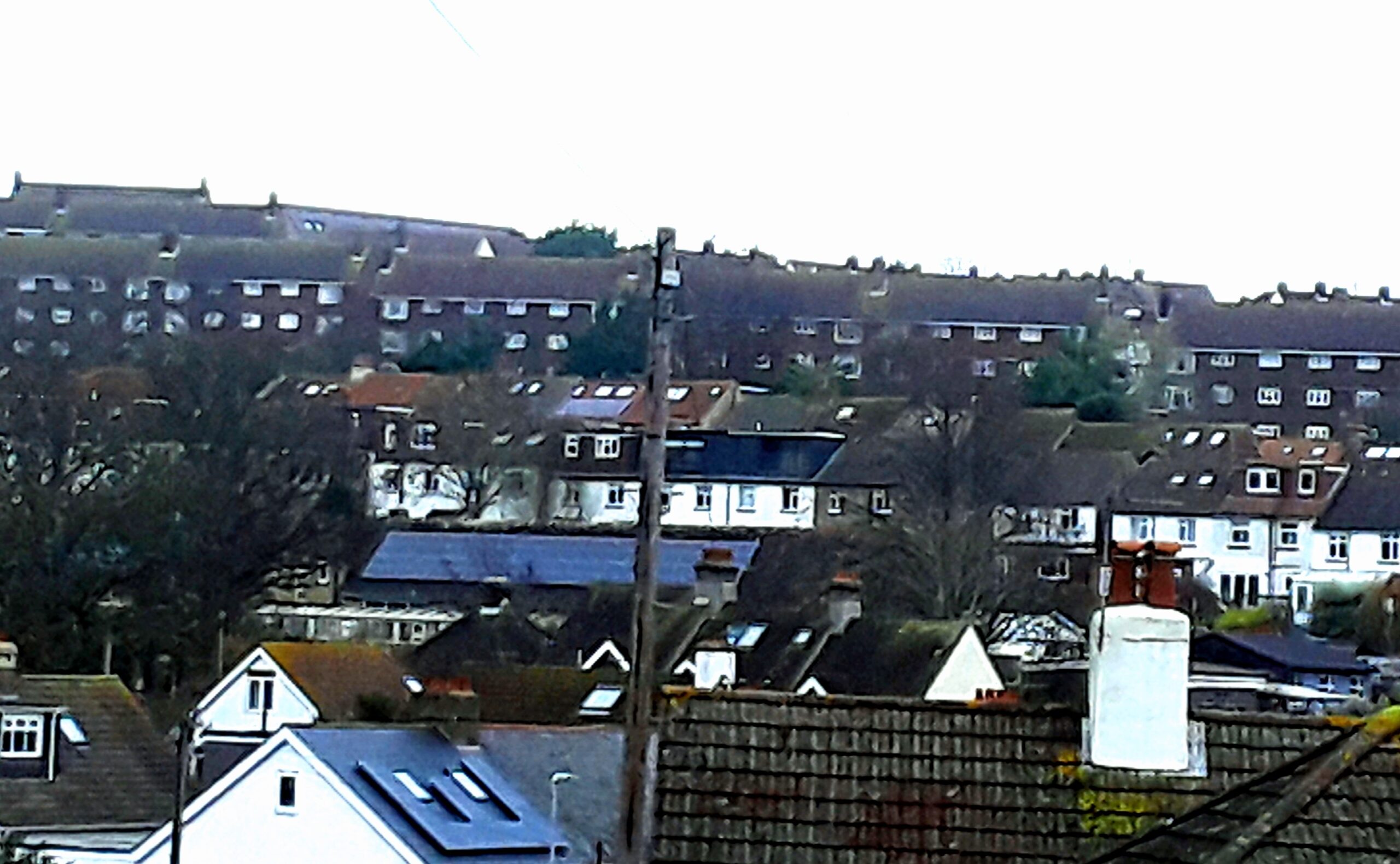
Money handed over to the council by developers is helping to pay for more new council homes for people on the waiting list in Brighton and Hove, councillors were told.
Labour councillor Julie Cattell asked about developer contributions, offered in place of “affordable” housing, and their importance in funding former council flats and houses.
She made her comments at Brighton and Hove City Council’s People Overview and Scrutiny Committee yesterday (Tuesday 14 July) as members discussed housing strategy.
Councillor Cattell is a former chair of the council’s Planning Committee. Members have often complained about developers offering money instead of affordable housing.
But developers have cited problems in making a profit, with land and building costs rising, and an unwillingness by housing associations to take on a handful of affordable homes in a scheme.
The council’s policy is for 40 per cent of homes to be classed as affordable in schemes of 15 or more, with a smaller percentage in scheme of five plus.
Examples of developers offering money instead of homes – known as a commuted sum – include £500,000 offered by Martin Homes in 2024 instead of 16 flats in the £16 million Buckingham Road development.
In July 2025, £240,000 was offered as a potential contribution for the £14 million project to convert the old St Catherine’s Lodge Hotel into 30 flats. This figure is subject to review.
Labour councillor Gill Williams, the council’s cabinet member for housing and new homes, said that developer contributions were put towards either building or buying back former council homes.
They include sums paid as a result of legal agreements such as the community infrastructure levy (CIL) and section 106 agreements – deals made under section 106 of the Town and Country Planning Act 1990.
Councillor Williams said: “It worked very well recently in Rottingdean (St Aubyns). We originally agreed to have a number of houses to sell to us at a good price but then, for whatever reason, we ended up buying 27 more.
“If we have a good relationship with developers, that can work in our favour.”
The council’s housing strategy and enabling manager Diane Hughes said that the council had been using developer contributions to buy back former council homes sold under the “right to buy” since 2019.
She said: “We of course prefer to have the housing delivered on site so we will always try to push for that wherever possible (but) it’s a very useful addition to our resources.”
In March, the council bought back four homes in Bevendean – family homes sold under the right to buy and later turned into shared houses.
Two six-bedroom student homes were being turned back into four-bedroom family homes.






Where are the next lot of Council homes going within the City.
We’ve got Moulsecoomb starting, maybe top of Whitehawk at the top.
When the Council demolish the homes within the City are they re-building more?
We seem to see a lot of development suggest they can achieve affordability targets, then revise their figure to something much lower once they have secured the work, to which councils generally have little recourse over.
I wonder if there should be a higher tier of commutable sum, for when the affordable target is deemed to be unachievable after acceptance of the tender.
Might promote a more honest initial assessment and tender?
The Council should start by buying St Catherine’s Lodge back and doing the conversion themselves. It has planning permission and is ready to go! The developer appears to be letting a stunning listed building go to rack and ruin which needs either council enforcement action or Compulsory Purchase before some mysterious accident happens to it! The developers are only going to try and weedle their way out of any affordable housing provision claiming it doesn’t stack up for them anyway, which it sounds like they are doing. No more game playing. time wasting and putting the building at even further risk. Compulsory purchase now! It is largely the council’s fault it got into such a state using it as a hostel when it had been a lovely hotel and Hove land mark before that.
This hot dry spell often results in mysterious fires!
I bet the money gets swallowed up by other ‘ legacy’ projects ….
What do you mean by legacy project? That could be a project that’s been planned, but hasn’t been funded yet, for example. That’s not a bad thing. Planned works before ad-hoc seems like a much better method, right?
But would that ‘planned projects’ mean new Council homes?????? I doubt it… I look forward to being wrong !!
The current direction of travel seems promising on social housing, looking at the housing reports on what’s been built over the last couple of years, and the buy backs, and reduction of temp. housing. But, I think we’re thinking the same, there’s still a lot more to do!